Perhaps the most technical thing that all MBA students learn, or should learn is using VBA to automate excel and word. Gove Allen at BYU teaches a fantastic class which does just that, take a look at the creative projects his students have recently completed: Custom ‘mail merge’ for sending SMS messages, importing data into excel from craigslist, or automating the creation of a work schedule to cover multiple shifts.
Until recently, the cloud-based solutions like Google Docs and spreadsheets have not allowed such automation. About a year ago, Google announced Appsscript. Now, a new code editor has appeared with a few interesting features.
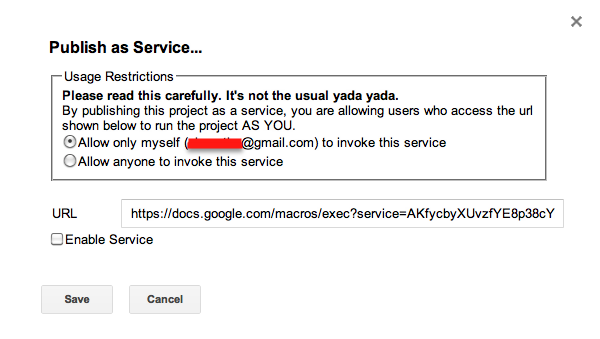
First, you can publish your code as a service, allowing anyone in the world to invoke it. The service-oriented-architecture fans should get excited about this. See the image:
Second, it ties in nicely with useful google APIs, and hopefully more APIs in the future.
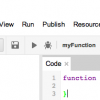
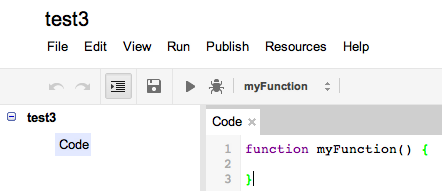
Things just got interesting! It will be fun to see what this enables in the future. It looks like they have recently included a user-interface builder. If anything it is one more reason to move to the cloud. Here is a screenshot of the script editor:
It’s the end of the world as we know it, and I feel fine. -REM (lyrics)
One in seven people in the world feel that the end of the world is near, according to this Reuters poll. While I don’t know about the end of days, I’ll postulate that it is the end of the tech world as we know it. Consider this:
“There’s an app for that. That’s the iPhone. Solving life’s dilemma one app at a time.” –iPhone 3g marketing, 2008
Less than 4 years later there were over a million apps in both Google Play and the App Store combined. On top of mobile, lets add the cloud. Harvard Business Review argues that cloud computing is a “sea change—a deep and permanent shift in how computing power is generated and consumed.”
There are many technologies and factors enabling the shift to the cloud and to mobile. One of them is the RESTful webservices. I won’t go into technical detail here, but I’ll recommend this Wikipedia page and this excellent book chapter for further reading. Just as there is “an app for that” for consumers, there is a “RESTful webservice for that” for developers. Does your app need to send an email, text message, save files to the cloud, keep track of customer account balances, or start a business process in your office? If so, you can easily tie to Sendgrid, Twilio, Dropbox, Accumulus, or RunMyProcess for that functionality. The number of these services is exploding, according to programmable web here is the number of services in each year: 180 in ’07, 1,627 in ’10, and 3,898 today. See a crowd-curated list of 400 of these tools here.
So, what does this mean? Apps are becoming faster, easier and cheaper to develop. This has two implications:
First, developers can now focus on their core service while utilizing webservices for peripheral functionality. This enables creating a minimum viable product for a market quickly, leading to faster profitability. After launch many will choose to replace 3rd party webservices, improving their margins.
Second, managers and others with little knowledge of programming can piece together these services to make ad-hoc cloud-based applications to automate internal or customer facing business processes. I refer to this idea, as the composable web, and we can already see this with the visual programming like environments of tarpipe.com, ifttt.com, and runmyprocess.com.
I teach a class where students learn how to automate a business process using several webservices and even cloud labor. One of them wrote this on their final exam:
With the continued innovation of technology I’m a 100% certain the need for human/manual work will become obsolete. Sadly, I estimate that 80% of tasks performed manually can be performed automatically by various programs and software, leaving only 20% that must be performed manually, to me this poses a tremendous threat to future employment. -Student, (shared with permission)
It is the end of the world as we have known it, and I feel fine.
P.S. The cloud-based (of course!) software that we use in class is RunMyProcess. Here is a great video that explains their product, along with other concepts I have tried to convey:
If you have not seen – ifttt.com (IFTTT = If This Then That)… check it out! It allows you to trigger tasks based events that happen all around the internet. Some of the nifty uses that my students came up with: (see more here).
Pitch a tent before dark. Notify via SMS fifteen minutes before sunset, to know when to pitch a tent while hiking the Appalachians.
Find a job. Notify via Email when jobs postings matching a certain criteria are posted on indeed.com
Save your face. Upload images to dropbox of photos i’m tagged in on facebook.
Avoid allergies. Notify via SMS if the pollen count forecast is above 9000.
Stay Aware. Automatically add severe weather warnings from NOAA to google calendar.
This is a useful introduction to the concept of a Complex Event Processing System. IFTTT could be considered a CEP system if a combination of events could trigger a task. For example, if its between 3-6pm, AND there is an accident on the interstate, then send SMS alert. I just saw wappwolf.com which is like IFTTT for dropbox, and also exemplifies the positive externalities associated with cloudcomputing.
Recently I was in New York for the BPM 2010, and Human Potential conferences and I took the opportunity to visit from friends at Columbia University.
While there, in Hamilton Hall, I saw a well written paragraph on the importance of problems and question in academia. Click the thumbnail to see a larger image.
It reads:
The focus of Academia can be defined as not so much a set of topics but as a set of problems. Physicists, economists, historians, and so on have problems that are specific to their fields, and are collectively working on points of intersection in order to solve these problems. Consequently, in every peice of academic writing ther is some problem, some issue, some motivating question that is being explored.. at the heart of every piece of academic writing is academic inquiry.
I was surprised to find this randomly, in the only room at Columbia which I visited. I like it, and though it worth sharing. I think it highlights the importance of publication as a conversation as Anne Huff’s book points out. Also, the importance of asking great and exciting questions. While at BPM 2010, I met Vasant Dhar from NYU who talked about what issues or questions are at the heart of education and research in the information systems field. They serve as a useful guide for those wondering what IS is, and a starting point for further questions. From Vasant’s paper:
Business Centric Questions
How does IT transform industries and change the boundaries between them?
How do platforms alter existing business models and create new ones?
What determines success with a firm’s IT investments?
How do firms effectively get value from and govern data?
Why do incumbent companies frequently miss large, new IT-based opportunities?
Technology-Centric Questions
How do unique characteristics of digital goods impact business models?
Why do network effects pervade IT-based businesses and how do they alter strategy?
How does human behavior/interaction differ in spaces mediated by Information Technology?
Dhar, V., & Sundararajan, A. (2007). Issues and Opinions–Information Technologies in Business: A Blueprint for Education and Research. Information Systems Research, 18(2), 125.
I have seen some excitement about Virtual Computing Labs for students. This allows students to access software and resources from their home that normally would only be available to them from an on campus computer lab. A need for mobile educational resources, and dropping technology costs are driving the introduction of virtual computing lab environments.
Virtual Computing Labs also solve an age-old problem for students and professors alike. Student’s laptops have various flavors of (often unkempt) operating systems on them, they often encounter snags when installing larger pieces of software (e.g. ones that need SQLServer or IIS to run). By having access to a virtual computer these problems can be avoided.
Traditionally VCL environments are made possible by server arrays in data centers in a university data center. Today such technology is only available to a few faculty within a very small percentage of universities. Amazon Web Services allow students to remotely connect to machines (Windows 2008 in my case), regardless of their host OS, where they can install any software they wish. Best of all, they are only charged for how long they use the machine.
In December 2009 Amazon announced it is possible to stop and start servers, thereby not loosing any of your data that prior to that would have been lost on terminating the server. In February 2010 Amazon announced consolidated billing, which it would make it easy for a professor to foot the bill for the students. Just hope that the student’s do not forget to “stop” their instances. In April 2009 Amazon announced AWS in Education grants — which give instructors $100 in AWS credits (to give to each student).
How much does this cost?
Well if you get the $100 Education Grant from Amazon… nothing.
If the students use the instance of the machine for an average of 5 hours each week over the course of a 16 week semester the cost would be: 5 hours X 16 weeks = 80 hours @ 12.5 cents an hour = 10$. In addition, the students would need to pay for the persistent storage of their data. This would be 10 cents per gigabyte per month: 30 gigabytes x 10 cents per month = $3 per month or $12 for the semester. This is easily within the $100 education credit from Amazon. And this also assumes that the students “stop” their instance when they are done using it.
I don’t work for Amazon, but I think this service can solve many potential headaches for professors and students alike at almost no cost. It’s also fun… Students get to setup their own servers in the cloud, and who wouldn’t be excited to do that?
If you want to try it out, follow all the directions at EC2 for Poets! And if you have any problems, leave a comment here…







Recent Comments